

Everything you need to know about CGM safety, side effects, and who can benefit most, backed by science.
Imagine being able to see how your blood sugar moves in real time after every meal, during a workout, and even while you sleep. That’s exactly what a Continuous Glucose Monitor (CGM) does. And if you’ve been wondering whether it’s safe to use every day, you’re not alone.
CGM technology has come a long way in the last few years. What was once a tool reserved for people with severe Type 1 diabetes is now being used by people managing Type 2 diabetes, PCOS, fatty liver, insulin resistance, and even by those simply wanting to understand their metabolic health better.
In this blog, we’ll break down how CGMs work, what the clinical evidence says about their safety, what side effects to expect, and who should exercise caution all in plain, jargon-free language.
How Does a CGM Work?
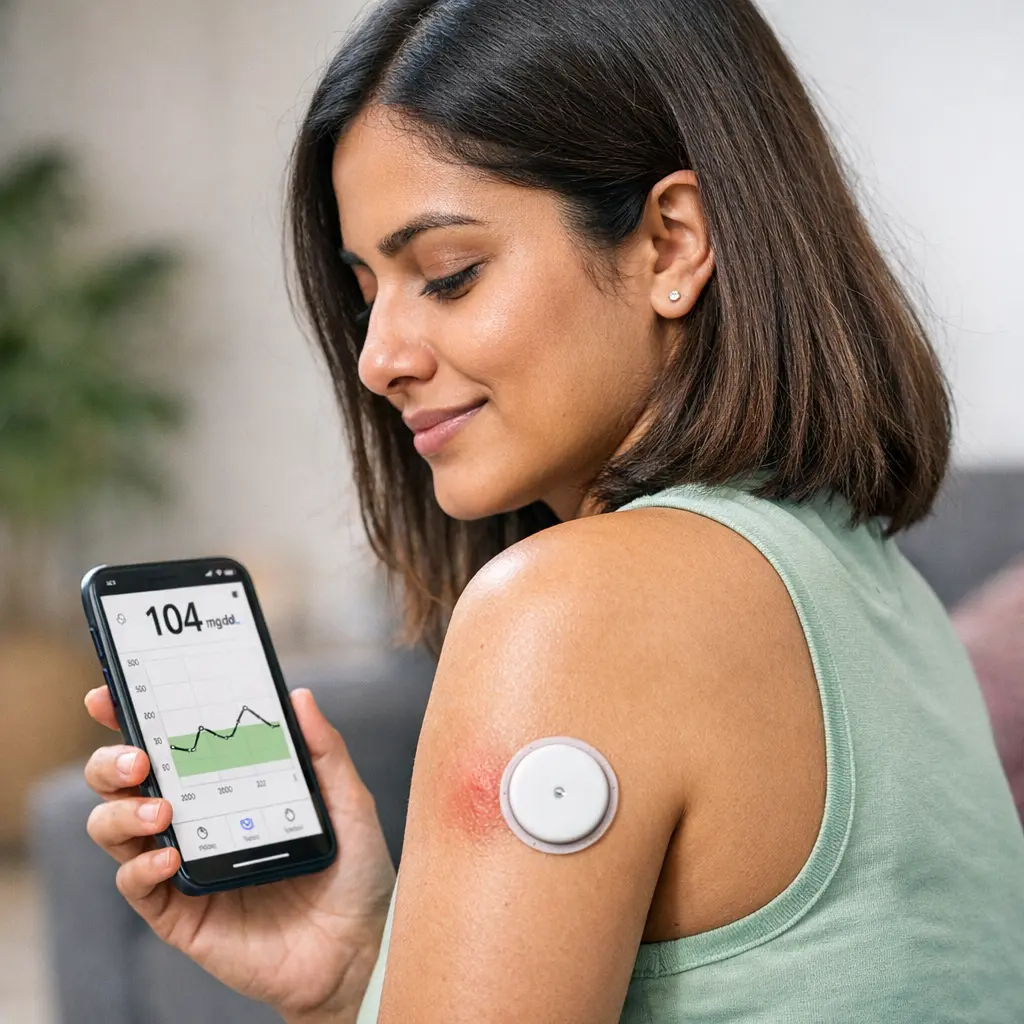
A CGM is a small wearable device that measures glucose levels in the fluid just beneath your skin (called interstitial fluid) rather than from a blood sample. Here’s how a typical session works:
- A tiny, flexible sensor is placed on the upper arm or abdomen using a painless applicator.
- The sensor continuously reads glucose levels in the interstitial fluid and transmits this data wirelessly.
- A transmitter (reusable, in devices like the GoodFlip CGM) sends readings to your smartphone app in real time.
- You receive readings every few minutes, up to 480 per day, along with trend arrows and alerts for highs or lows.
The GoodFlip CGM , India’s Best Bluetooth-enabled CGM device, delivers one reading every 3 minutes with a clinically validated accuracy of MARD 9.07%, placing it in line with global CGM standards. It can be worn continuously for 14 days, is water-resistant, and requires no manual scanning.
The GoodFlip app pairs with the transmitter to display data, log meals, and offer AI-powered metabolic insights.
Is CGM Safe? What Does the Science Say?
The short answer is: yes, CGM is considered safe for daily use by most people. Let’s look at what research actually says.
Peer-Reviewed Clinical Evidence
A 2024 systematic review and meta-analysis published in Diabetes Care (University of Leicester), analysing 26 randomised controlled trials involving 2,783 Type 2 diabetes patients, found that both real-time CGM and flash CGM led to meaningful reductions in HbA1c levels. The review noted that adverse events associated with CGM use were generally low-severity and manageable. PubMed
A separate 2024 review published in The Journal of Clinical Endocrinology & Metabolism (Oxford Academic) confirmed that both real-time and flash CGM devices led to modest but statistically significant HbA1c reductions of around 0.32-0.34%. Importantly, the review noted that adverse event profiles were similar between CGM users and those using traditional finger-prick testing, with the most common events being non-serious hypoglycaemic episodes.
A broader review published by the National Institutes of Health (PMC) found that CGM has demonstrated improvements across multiple glycaemic metrics, including HbA1c reductions of 0.25%-3.0% and time-in-range improvements of 15%-34%, while also serving as an educational tool for lifestyle modification.
In terms of serious adverse events, the FDA’s own clinical study data on a leading CGM device reported that no serious adverse events (SAEs) were found during pivotal clinical studies, with risks largely limited to inaccurate readings or false alerts rather than medical harm.
Key Takeaway: Multiple large-scale clinical trials consistently show CGM is safe for daily use. Serious adverse events are rare. Most reported issues are minor skin reactions, which are manageable with proper technique.
Possible Side Effects of CGM Use
Like any wearable medical device, CGMs can cause some side effects. The good news is that the vast majority are mild and preventable with proper care.
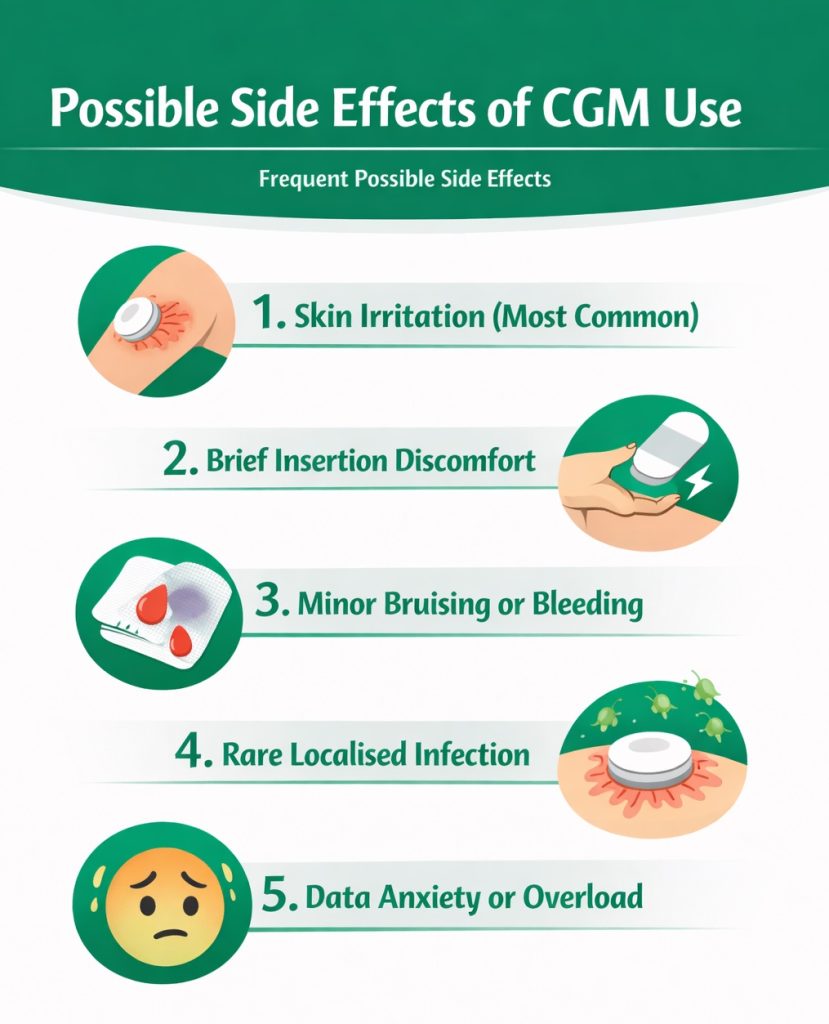
1. Skin Irritation (Most Common)
The adhesive used to secure the sensor to the skin is the most frequent culprit. You may experience:
- Redness or itching at the sensor site
- Mild rash or contact dermatitis
- Skin induration (slight hardening) after extended wear
A systematic review in PMC found that the overall incidence of cutaneous complications was about one event per eight weeks of sensor wear, with 78.6% rated as mild and only 1.5% considered severe. Most users actually reported less pain than traditional finger-prick testing.
According to DiaTribe, a leading diabetes health platform, about 1 in 4 CGM users report some form of skin reaction, but only around 3% discontinue use because of it.
2. Brief Insertion Discomfort
The sensor applicator inserts a tiny, hair-thin filament just under the skin. For most people, this is painless or causes a brief, mild sting. The GoodFlip CGM uses a one-touch applicator designed for comfortable self-application.
3. Minor Bruising or Bleeding
Small bruises at the insertion site can occur, especially in people on blood thinners. This is uncommon and typically resolves within a day or two. Rotating sensor sites helps prevent this.
4. Rare Localised Infection
Infection at the sensor site is rare but possible if hygiene isn’t maintained. Signs include warmth, swelling, and redness that worsen rather than improve. This is almost always preventable by:
- Washing hands before sensor application
- Cleaning the skin with a wipe and letting it dry fully
- Rotating sensor sites every 14 days
5. Data Anxiety or Overload
Some first-time CGM users feel overwhelmed by the constant stream of glucose data. Seeing every fluctuation can sometimes cause unnecessary stress, especially since small, temporary spikes are completely normal and don’t always require action.
Platforms like GoodFlip address this by providing a dedicated health coach who helps you interpret your glucose trends in context.
Who Should Use CGM with Caution?
CGM is suitable for most adults, but certain groups should consult their doctor before starting:
Group | Why to Consult First |
Pregnant women | CGM research in gestational diabetes is still evolving; clinical guidance varies. (Source: PMC/NIH) |
People on blood thinners | Higher bruising risk at insertion site; medical supervision advised. (Source: DrOracle) |
Those with sensitive skin or eczema | Higher chance of adhesive reactions; hypoallergenic solutions available. (Source: DiaTribe) |
Children under 2 years | Limited body surface area makes sensor placement difficult. (Source: PMC/NIH) |
People with pacemakers or defibrillators | Consult your cardiologist regarding Bluetooth signal interaction. |
CGM vs. Traditional Finger-Prick Testing: A Safety Comparison
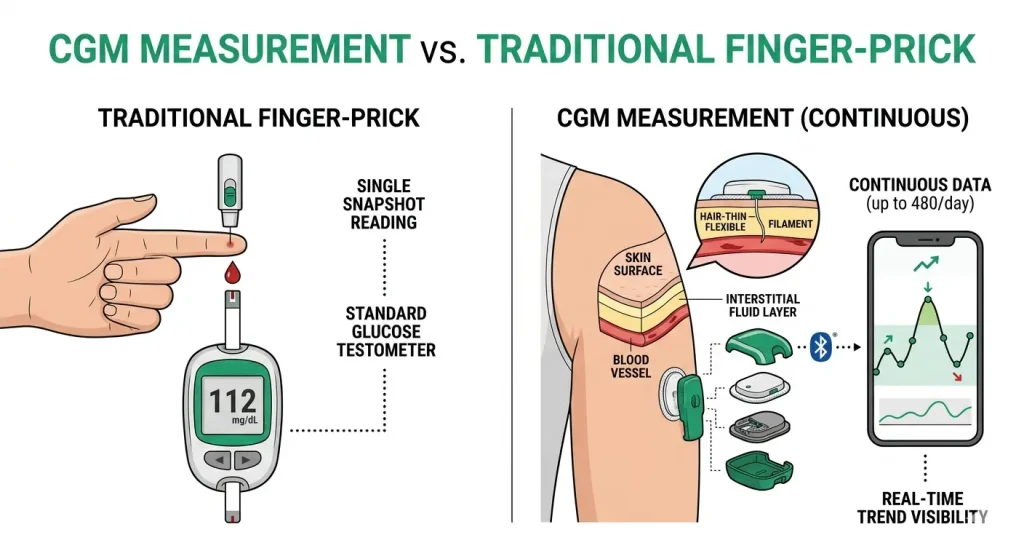
Factor | Traditional Glucometer | CGM (e.g., GoodFlip) |
Pain | Daily finger pricks | One sensor insertion per 14 days |
Readings per day | 4-8 (manual) | Up to 480 (automatic) (Source) |
Trend visibility | None, single snapshots | Real-time trends, highs/lows alerts |
Infection risk | Daily skin breaks | One insertion, well-managed hygiene |
Skin reactions | Calluses from repeated pricks | Mild adhesive reactions possible (Source) |
Data completeness | Misses overnight & post-meal spikes | 24/7 continuous coverage |
Read More: Glucometer vs CGM – Best Way to Track Blood Sugar
Who Can Benefit Most from CGM?
CGM is no longer just for people with insulin-dependent diabetes. Here are the groups who typically see the greatest benefit:
- People with Type 1 or Type 2 diabetes: for tighter glucose control and reducing dangerous spikes or crashes (Source: Diabetes Care, 2024)
- People with prediabetes: to catch metabolic dysfunction early, before it progresses
- Those managing PCOS or insulin resistance: glucose patterns are closely tied to hormonal health
- People with fatty liver disease: often rooted in metabolic imbalance that CGM can help reveal
- Health-conscious individuals: who want to understand how their diet, sleep, and exercise affect their metabolism
According to CMR-INDIAB data cited by GoodFlip, approximately 71% of Indian adults are metabolically unhealthy, dealing with high blood sugar, cholesterol, or blood pressure. CGM gives these individuals the kind of personalised, real-time data that generic health advice simply cannot provide.
CGM Is Safe and Worth the Investment
Continuous glucose monitoring is well-established, clinically validated, and safe for daily use for the vast majority of people. The benefits, 24/7 glucose visibility, trend alerts, lifestyle feedback, and better metabolic understanding, significantly outweigh the manageable, mostly skin-level risks.
Here’s the quick summary:
- CGM is safe and clinically supported for daily use in people with diabetes, prediabetes, and metabolic conditions (Diabetes Care, 2024)
- The most common side effects are mild skin reactions, manageable with proper hygiene and site rotation (PMC, 2020)
- Serious adverse events are rare and reported even less frequently than with standard finger-prick testing (FDA SSED)
- Certain groups (pregnant women, children, those on blood thinners) should use CGM with medical guidance
- The GoodFlip CGM pairs clinical-grade accuracy (MARD 9.07%) with a support system of coaches and AI insights, making it one of India’s best & most accessible CGM solutions (GoodFlip)
Ready to see what your glucose is doing right now? Explore India’s best CGM device by GoodFlip and take the first step toward understanding your metabolic health.
Frequently Asked Questions
Is it safe to wear a CGM while sleeping?
Yes. CGMs are designed for round-the-clock wear and are especially valuable overnight, when undetected hypoglycaemia can occur. The GoodFlip CGM sends real-time alerts to your phone for highs and lows, even while you sleep.
Can I shower or swim while wearing a CGM?
Yes. The GoodFlip CGM is water-resistant, so everyday activities like bathing and swimming are fine. However, prolonged submersion should be avoided, as per the manufacturer’s guidance.
Does a CGM replace my regular glucometer?
Not necessarily, especially if you’re on insulin. CGM provides continuous trend data, but some clinical situations require a finger-prick confirmation reading. Think of CGM as a powerful complement to, not a replacement for, traditional monitoring. (Source: FDA CGM Safety Data)
Can non-diabetic people use CGM safely?
Yes. CGM is increasingly used by people who don’t have diabetes but want to understand their metabolic health, including those managing PCOS, fatty liver, or weight. There are no established safety concerns for healthy adults using CGM for wellness monitoring. (Source: PMC/NIH Review)
What should I do if I develop a skin reaction?
Mild redness or itching is common and usually resolves after sensor removal. Rotate your sensor site each cycle, ensure your skin is clean and dry before application, and consider using a skin barrier wipe. If you develop a severe rash, blistering, or signs of infection, consult a dermatologist and inform your CGM provider. (Source: DiaTribe)