

You don’t need a gym membership to boost metabolism, just small, steady movement breaks.
Why 10 Minutes of Movement Matters More Than You Think?
If you’ve been sitting all day and think, “I’ll make up for it with one workout later,” here’s the truth: your metabolism doesn’t work on a single payback system. Even short bursts of movement a 10-minute walk, a gentle stretch, or a standing break, instantly wake up your muscles, improve blood flow, and make your body use glucose more efficiently.
Researchers call this “non-exercise activity thermogenesis (NEAT)”, the calories you burn outside formal workouts. And these little actions can collectively change your metabolic health.
What Happens Inside Your Body When You Move Lightly?
When you stand up or take a walk, your leg and back muscles start contracting. These contractions signal your cells to activate GLUT-4 transporters, the gatekeepers that pull sugar from your blood into muscles for energy.
This process:
- Reduces blood sugar spikes after meals
- Improves insulin sensitivity for hours
- Prevents post-lunch energy crashes
In fact, studies show that just 10 minutes of light walking after meals can lower glucose levels better than one long workout later in the day. So, a few steps after lunch aren’t “too little”; they’re metabolically powerful.
From Desk to Door: Micro-Movements That Boost Metabolism
Modern work life has us sitting more than ever, often 9–10 hours a day. But you can break that sedentary cycle without leaving your desk.
Here are micro-movements that take under 30 seconds each, but keep your muscles “switched on”:
- Roll your shoulders or stretch your arms overhead every hour.
- Stand up for calls or team discussions.
- Walk to refill your water bottle every 45–60 minutes.
- Take the stairs instead of the elevator for one or two flights.
- When waiting for something to load, do heel raises or calf stretches.
Each of these “snippets” boosts circulation, burns a few extra calories, and prevents stiffness. Over time, they add up to a meaningful metabolic difference.

Walking vs. Stretching: What’s Better for Beginners?
The best answer: the one you’ll actually do.
Walking:
- Improves insulin sensitivity and cardiovascular health.
- Ideal if you’re sedentary or spend long hours at a desk.
- A 10-minute walk after lunch or dinner helps control blood sugar and digestion.
Stretching & Mobility Work:
- Reduces stiffness and improves posture.
- Great for home workers or anyone sitting cross-legged or on a couch.
- Enhances flexibility, which supports better blood flow and recovery.
Combine both: a short walk plus a 2-minute stretch session = complete metabolic recharge.
5 Easy Office-Friendly Moves to Break Sedentary Life
You don’t need space, equipment, or even workout clothes. Try this mini movement kit right at your desk:
Calf Raises: Stand up, lift your heels off the floor, hold 3 seconds, repeat 15 times. Improves leg circulation.
Seated Twists: Sit tall, twist your torso gently side to side. Relieves spine stiffness and boosts digestion.
Wall Push-ups: Place your hands on a wall, step back, and perform 10–15 slow push-ups. Strengthens shoulders and arms.
Chair Squats: Stand up and sit back down slowly 10 times. Activates large leg muscles that burn glucose efficiently.
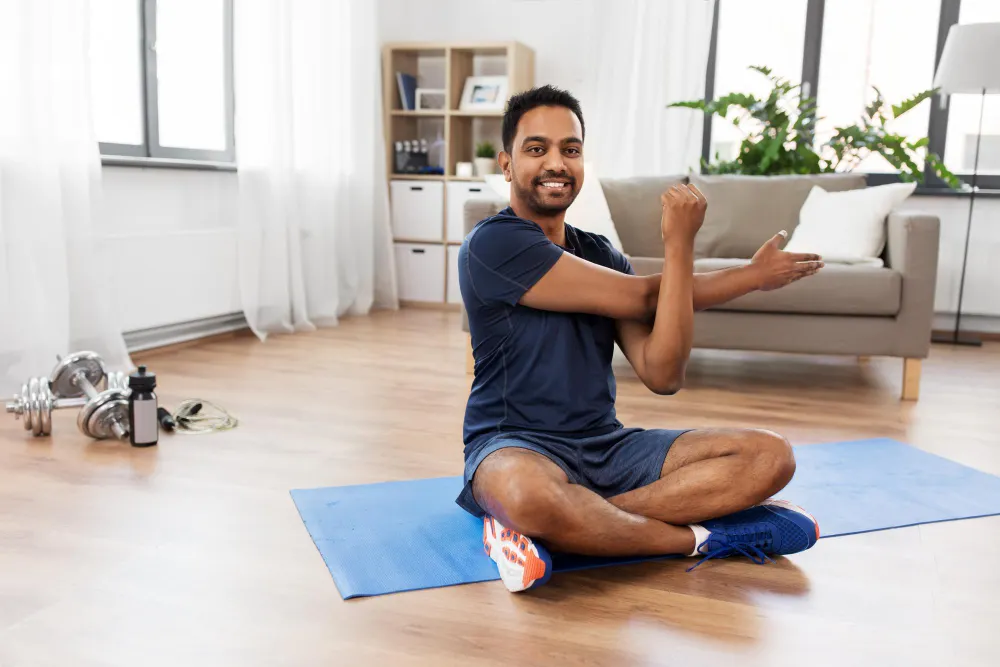
Standing Side Stretch: Raise one arm overhead and lean sideways. Opens the rib cage for better breathing and oxygen flow.
Do one or two every hour, that’s it. The goal isn’t intensity; it’s consistency.
How Small Movements Improve Insulin Sensitivity?
Here’s where science meets simplicity.
When you move, your muscles contract, activating GLUT-4 transporters, the tiny molecular doors that allow glucose to enter cells.
These doors stay open for hours after movement, meaning your body keeps managing blood sugar more efficiently even when you’re resting later.
That’s why doctors often recommend walking right after meals: it flattens glucose spikes and trains your body to respond better to insulin over time.
Think of your muscles as sponges when you move them, they “soak up” sugar from your bloodstream. When you sit still for long hours, those sponges dry out, sugar floats around unused, leading to fatigue and potential long-term issues like insulin resistance.
The Science-Backed Benefits of 10 Minutes a Day
| Benefit | What Happens | Why It Matters |
|---|---|---|
| Better Blood Sugar Control | Increases glucose uptake in muscles | Reduces risk of insulin resistance |
| Higher Energy & Focus | Boosts oxygen and circulation | Prevents the 3 PM energy crash |
| Lower Inflammation | Reduces oxidative stress from prolonged sitting | Supports long-term metabolic health |
| Calorie Burn & Fat Balance | Activates large muscle groups | Improves body composition gradually |
| Improved Mood | Releases endorphins | Reduces stress-related cravings |
Quick Mini-Movement Routine to Try Today
Here’s a 10-minute flow you can do anytime, anywhere:
- March in place – 1 min
- Shoulder rolls – 1 min
- Side stretches – 1 min
- Seated twists – 1 min
- Walk around your room or hallway – 3 mins
- Calf raises or squats – 2 mins
- Deep breathing or arm stretch – 1 min
That’s 10 minutes total, just enough to recharge energy, improve blood flow, and steady your metabolism.
The Bottom Line
You don’t need perfection, you need movement snacks. A few minutes every hour can do more for your metabolism than one intense session at the end of the day.
Start small:
- Set reminders to stand.
- Walk after meals.
- Do quick stretches between meetings.
Every 10 minutes you move is a win for your metabolism, your mood, and your long-term health.
So, next time you catch yourself sitting for too long, get up, stretch, and remind yourself: small moves, big impact.