

The Future of Metabolic Health Is Here, And It’s on Your Arm
Imagine knowing exactly how your body reacts to a plate of poha versus paneer bhurji. Or being able to see why skipping sleep or late-night stress makes you crave sweets the next day.
That’s the power of Continuous Glucose Monitoring (CGM); a small sensor that gives real-time insights into your blood sugar levels, helping you understand what your body needs.
Originally designed for diabetics, CGM is now redefining how people approach weight loss, PCOS, and even chronic fatigue, especially in India, where metabolic health issues are on the rise.
What Exactly Is CGM and How Does It Work?
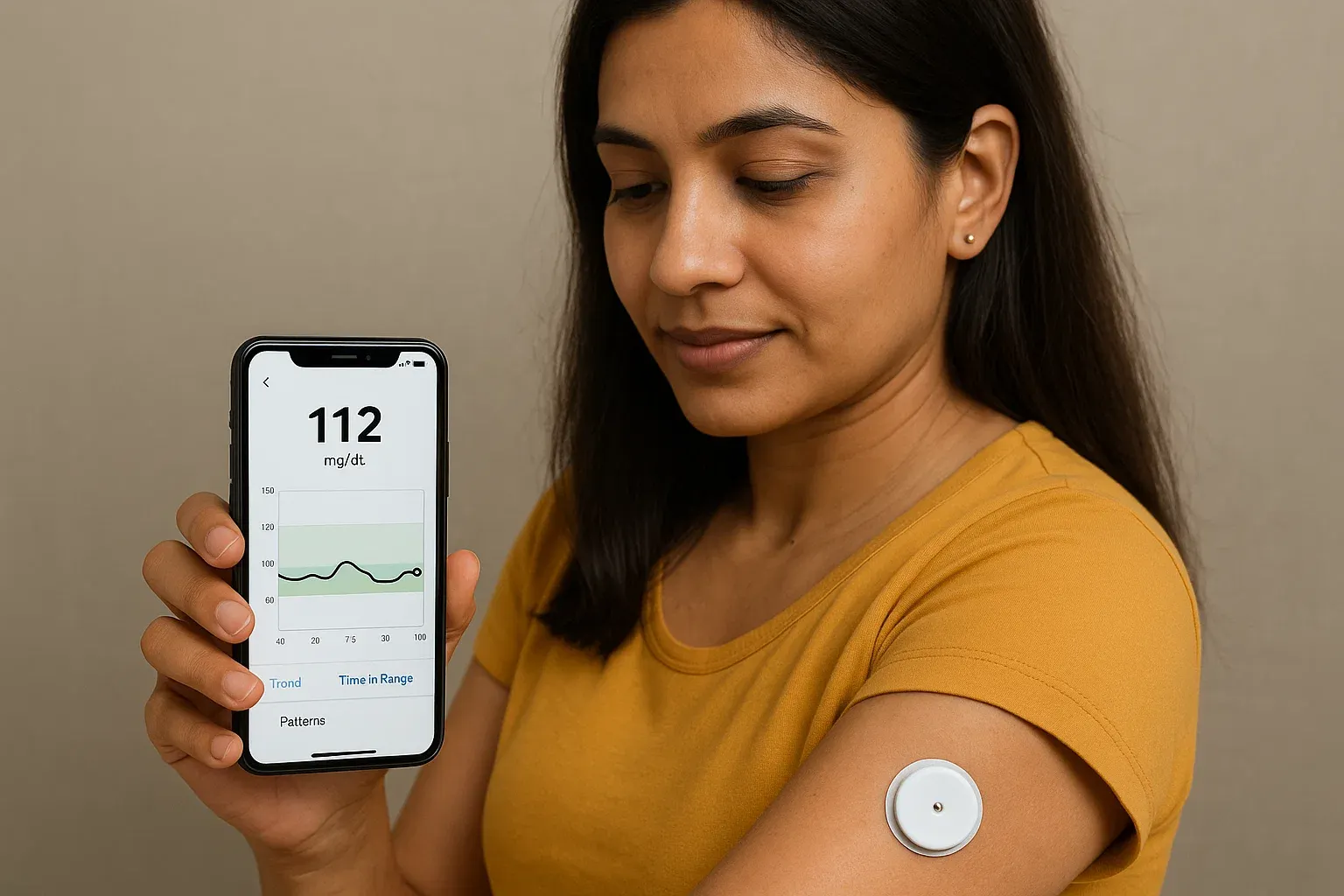
A Continuous Glucose Monitor (CGM) is a small wearable sensor (usually on your arm or abdomen) that tracks your blood sugar (glucose) 24/7. Instead of finger-pricks or lab tests, the CGM sends data every few minutes to an app showing:
- Current glucose level
- Trend arrows (rising or falling)
- Patterns throughout the day and night
The key metrics to know:
- Time in Range (TIR): Percentage (%) of time your glucose stays in a healthy range (typically 70-140 mg/dL for non-diabetics).
- Glycemic Variability (GV): How ‘bouncy’ your sugar levels are. Lower variability = steadier energy.
- Average Glucose: Your daily mean blood sugar.
Together, these metrics paint a detailed picture of how your food, sleep, stress, and activity affect your body in real time.
Why CGM Is Becoming Popular Beyond Diabetes?
1. For Weight Loss
CGM helps you discover your personal glucose triggers, foods, or habits that spike your blood sugar quickly and crash it later, leading to hunger, cravings, and fat storage.
When you see these spikes on your screen, you naturally begin to make smarter choices:
- Swapping white rice for brown rice or millets (like foxtail or jowar)
- Having dal or paneer first and rotis later
- Taking a 10-minute walk after dinner
- Avoiding late-night desserts or chai with sugar
These small tweaks improve your glucose stability, reduce cravings, and help burn fat more efficiently. Studies show people who use CGM for behaviour tracking lose 2-4 kg more in 3 months than those relying on calorie tracking alone.
Read More: Best Metabolism Supplements For Women With PCOS
2. For PCOS and Hormonal Health
Polycystic Ovary Syndrome (PCOS) affects nearly 1 in 5 Indian women of reproductive age. One of the biggest root causes? Insulin resistance, when the body stops responding well to insulin, causing higher blood sugar and more fat storage.
CGM helps women with PCOS by:
- Revealing hidden glucose spikes even when fasting sugar looks ‘normal’
- Showing how different meals affect ovulation and energy
- Helping plan cycle-friendly meals; many women notice higher glucose spikes during the luteal phase (second half of their cycle)
- Supporting doctors and coaches in creating personalised nutrition and activity plans
Example:
A woman with PCOS might notice that her usual breakfast of cornflakes with milk sends her glucose above 160 mg/dL, while switching to moong dal chilla with curd keeps it steady below 120 mg/dL, and her mid-day crash disappears.
3. For Chronic Fatigue and Energy Management
Feeling exhausted even after sleeping enough? You’re not alone. Many people with chronic fatigue or burnout experience glucose swings that drain energy.
A CGM helps you connect the dots:
- You’ll see how glucose crashes after sugary snacks cause ‘brain fog’ or tiredness.
- You can spot patterns linked to fatigue like skipping breakfast or late caffeine.
- By maintaining steady glucose curves, you sustain energy and focus longer.
In simple terms: No spikes = no crashes = less fatigue.
Read More: Is Papaya Good for Diabetes?
The Science Behind It: Why Blood Sugar Stability Matters
When your glucose spikes quickly (say, after a big bowl of white rice or sweet tea), your body releases a surge of insulin to bring it back down.
Frequent spikes and dips can:
- Trigger hunger and cravings
- Lead to fat storage, especially around the belly
- Disturb hormonal balance (important in PCOS)
- Affect mood and focus
- Increase the long-term risk of metabolic disorders
A stable glucose curve keeps your metabolism efficient, energy consistent, and hormones balanced.
What You Can Learn from a 14-Day CGM Journey?
Here’s what most people discover within just two weeks:
| Habit | Common Finding | What Works Better |
|---|---|---|
| Eating carbs first (e.g., poha, paratha) | Sharp glucose spike (140-180 mg/dL) | Add paneer, eggs, or sprouts before carbs |
| Late-night dinners | Prolonged high glucose overnight | Eat 2-3 hrs before bed, light dinner |
| Sugary tea or biscuits | Glucose rollercoaster all morning | Black coffee/green tea + nuts |
| Skipping breakfast | Mid-morning crash and irritability | Balanced first meal with protein & fibre |
| Sitting after meals | Slower glucose clearance | 10-15 min walk post meal |
| Stress or lack of sleep | Unexplained higher fasting glucose | Meditation, journaling, fixed sleep time |
In short, CGM helps you build a metabolically intelligent lifestyle guided by your body’s own data.
How to Use CGM for Weight Loss (Step by Step Plan)?
You don’t need months of data to see results. Just a 2-4 week CGM experiment can transform how you eat and move.
Step 1: Baseline Week
- Eat your usual meals for 3 days.
- Log your food, sleep, stress, and activity in the app.
- Note your biggest glucose spikes.
Step 2: Make One Change Each Week
- Protein-first rule: Eat dal, paneer, eggs, or sprouts before carbs.
- Carbs-last approach: Have roti or rice after fiber or veggies.
- Move post-meals: 10–20 min walk or light chores.
- Hydrate & sleep better: Both reduce insulin resistance.
Step 3: Review Your Time-in-Range (TIR)
- Goal: Keep TIR > 85% (under 140 mg/dL most of the day).
- Notice if energy improves and cravings reduce.
- Use insights to plan sustainable habits not crash diets.
Using CGM for PCOS: Beyond Weight Loss

Women with PCOS often struggle with unpredictable periods, weight gain, and fatigue despite dieting. That’s because insulin resistance makes fat loss harder and hunger cues unreliable.
CGM helps by:
- Showing how certain foods (e.g., refined carbs or sugary tea) worsen insulin resistance.
- Helping tailor meal timing, some women benefit from an early dinner or 12-hour overnight fasting window.
- Revealing individual differences what spikes one person may not affect another.
Smart Indian swaps for PCOS-friendly glucose control:
| Common Food | Swap This For |
|---|---|
| White rice | Foxtail millet, brown rice, or quinoa |
| Roti with ghee | Multigrain roti with paneer filling |
| Fruit juice | Whole fruit (papaya, guava, apple) |
| Milk tea | Green tea, turmeric latte, or cinnamon tea |
| Fried snacks | Roasted chana, makhana, or peanuts |
These simple swaps, tracked via CGM, help balance hormones, support ovulation, and reduce long-term insulin load.
Chronic Fatigue: Using CGM to Regain Energy Balance
Chronic fatigue often has multiple triggers, poor sleep, under-eating, overtraining, or metabolic instability.
Here’s how CGM can help:
- Identify foods that cause ‘post-meal crashes‘ (sharp dips after spikes).
- Time meals to avoid long gaps especially mid-morning or evening slumps.
- Track how stress or caffeine timing affects your energy.
- Find your best fueling rhythm. For example, a balanced mid-morning snack like boiled eggs or peanuts may prevent the 4 PM crash.
Over time, smoother glucose trends translate into steadier physical and mental energy.
The Indian Context: Why This Matters More Than Ever?
India is the diabetes capital of the world, but millions more live in the ‘pre-diabetic‘ gray zone without knowing it. Sedentary jobs, irregular meals, sugar-loaded snacks, and chronic stress have made insulin resistance common even among young adults.
CGM helps reverse this trend early by showing your invisible glucose patterns long before a lab report flags ‘borderline sugar.’
That’s why fitness enthusiasts, doctors, and preventive health startups in India are adopting CGM for lifestyle-driven metabolic care.
Common Myths About CGM
Myth 1: “It’s only for diabetics.”
Reality: Anyone can use CGM to understand metabolic responses and build healthy habits.
Myth 2: “It’s complicated to use.”
Reality: Most modern CGMs connect via Bluetooth and sync automatically with smartphone apps.
Myth 3: “You need to wear it forever.”
Reality: A 14-day or 28-day use can be enough to identify key triggers and build awareness.
Myth 4: “All spikes are bad.”
Reality: Occasional rises are normal. What matters is returning to range quickly and avoiding constant highs.
Before You Start: Talk to a Doctor or Coach
CGM isn’t a medical treatment; it’s a guidance tool. For best results, use it under the supervision of a healthcare provider or metabolic coach, especially if you:
- Have diabetes or PCOS
- Take medication that affects blood sugar
- Experience frequent fatigue or dizziness
The data makes sense only when interpreted in context and that’s where expert help turns numbers into insights.
Conclusion: Your Glucose Curve Is Your Health Story
In an era of ‘biohacking’ and self-tracking, CGM stands out for one reason: it’s deeply personal. No generic diet, no one-size-fits-all plan, just your body talking back to you in data.
Whether your goal is fat loss, balanced hormones, or sustained energy, CGM turns awareness into action, one meal, one walk, one insight at a time.